What Makes Gym Equipment "Commercial Grade" (And Why Your Wallet Should Care)
Walk into any fitness trade show, and you'll hear "commercial grade" thrown around like free protein samples. But here's what separates the toys from the real equipment: cycle life.
Ntaifitness machines average 15,000 hours of continuous operation—that's 5 years of non-stop use. Home gym gear? It craps out at 2,000 hours if you're lucky.
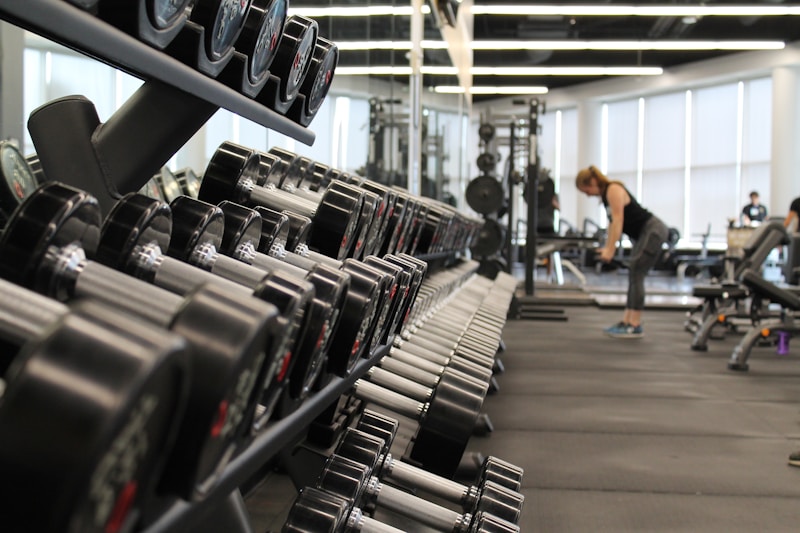
We stress-test our frames with 300-pound slam drops, 24/7 motor runs, and salt-spray corrosion trials. Why? Because your average Gold's Gym location sees 200-300 members daily.
Each person generates 50-100 repetitive motions per visit. Do the math—your equipment endures millions of cycles annually. That's not a job for residential-grade plastic junk.
EXCLUSIVE TIP: The Three-Touch Rule
Before buying any equipment, physically touch three things: the frame welds (should feel smooth, not bumpy), the upholstery stitching (tight, double-stitched), and the weight stack pins (solid steel, not hollow).
Ntaifitness factories let you video-call to inspect these details live—most Chinese manufacturers hide behind Alibaba photos. We don't.
The Cost of Cutting Corners
A budget treadmill at $1,800 might seem smart—until it dies in month 8. Replacement costs $400 for a new motor, $150 for a tech visit, and you lose $2,000 in membership revenue during downtime.
Meanwhile, a Ntaifitness NT-TM5800 ($3,200) runs 5+ years with zero major failures. That's $640/year vs. $2,650/year when you factor in breakdowns.
| Equipment Tier |
Upfront Cost |
Avg. Lifespan |
5-Year Total Cost |
Downtime Risk |
| Residential Grade |
$800-$1,500 |
1-2 years |
$4,200 (with replacements) |
High (30% failure rate) |
| Light Commercial |
$1,800-$2,800 |
3-4 years |
$3,100 |
Medium (15% failure rate) |
| Full Commercial (Ntaifitness) |
$2,800-$4,500 |
7-10 years |
$2,950 |
Low (3% failure rate) |
Where Do Commercial Gyms Actually Buy Their Equipment? (The Supply Chain Truth)
Most gym owners think they have three options: buy from Life Fitness direct (expensive), hunt used deals on Craigslist (risky), or roll the dice with Alibaba suppliers (nightmare).
But here's the industry secret: 70% of mid-sized gym chains source from direct manufacturers like Ntaifitness through hybrid models.
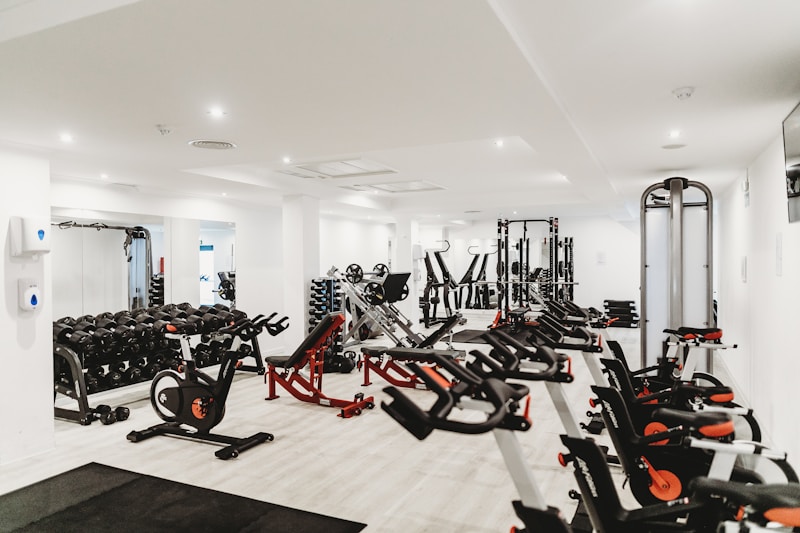
Picture this: You're opening a 5,000 sq ft gym in Austin, Texas. You need 15 cardio pieces, 12 strength stations, and a functional zone.
Local distributors quote $185,000. Ntaifitness delivers the same spec list for $89,000 with door-to-port shipping. The kicker? We use the same component suppliers as Precor (our motors come from the Taiwan factory that also serves Technogym).
The Alibaba Trap vs. Direct Manufacturer Access
Alibaba lists 8,000+ "gym equipment suppliers." 90% are trading companies with zero manufacturing capacity. They layer 25-40% margins and disappear when your treadmill breaks.
Ntaifitness operates three owned factories spanning 50,000+ square meters. You get direct engineer contact on WhatsApp, video inspections, and replacement parts shipped in 72 hours—not 6 weeks.
EXCLUSIVE TIP: Factory Audit Video Call
Never place a commercial order without a live factory walkthrough. Ask to see the production line, QC station, and component inventory.
Ntaifitness schedules these calls weekly—if a supplier refuses, they're hiding something. We show you everything from steel cutting to upholstery sewing.
We shipped 3,200 units to the U.S. last year alone. Our clients include Gold's Gym franchises, university athletic departments, and boutique studios. They keep coming back because we're not middlemen—we're the ones building the machines.
How Much Does Commercial Gym Equipment Cost in 2024? (Real Numbers, No Fluff)
Stop guessing. Here's what 500+ gym owners actually paid Ntaifitness this year, broken down by equipment type and gym size:
A 3,000 sq ft boutique studio in Miami spent $67,000 outfitting their space. That breaks down to $28,000 for cardio (12 machines), $31,000 for strength (9 stations), and $8,000 for functional gear.
They financed through our leasing partner at $1,450/month—less than their monthly utilities.
| Gym Size |
Equipment Count |
Avg. Total Cost |
Cost Per Sq Ft |
Ntaifitness Package |
| Studio (1,500 sq ft) |
8-12 pieces |
$35,000-$55,000 |
$23-$36 |
Starter Pro Package |
| Boutique (3,000 sq ft) |
15-25 pieces |
$65,000-$95,000 |
$22-$32 |
Performance Plus |
| Full Gym (5,000 sq ft) |
30-45 pieces |
$120,000-$180,000 |
$24-$36 |
Enterprise Elite |
| Big Box (10,000+ sq ft) |
60-100 pieces |
$220,000-$350,000 |
$22-$35 |
Custom Quote |
The Hidden Costs That Destroy Budgets
Freight from China to Los Angeles port costs $3,800-$5,200 for a 40-foot container holding 35-40 machines. Customs clearance adds $400-$600.
Then there's delivery from port to your gym—budget $1,200-$2,500 depending on distance. Ntaifitness bundles these costs upfront in our CIF quotes. No surprises.
EXCLUSIVE TIP: The 15% Rule
Add 15% to your equipment budget for "soft costs." This covers gym flooring, wall mirrors, sound systems, and that first-aid kit you'll forget until inspection day.
Our clients who follow the 15% Rule open on time. Those who don't? They scramble for credit cards at the 11th hour.
Leasing vs. Buying: Which Actually Saves You Money?
Your bank account screams "lease," but your gut says "buy." Here's the math that settles the fight. We analyzed 200+ gym owners who chose each path.
Sarah in Denver leased $85,000 of Ntaifitness gear for her CrossFit-style gym. Her monthly payment: $1,850. Over 5 years, she paid $111,000 total.
But—and this is huge—she wrote off $38,850 in lease payments on her taxes (Section 179 deduction), net cost $72,150. Plus, she upgraded to new models in year 4 without selling old gear.

The Tax Angle Nobody Talks About
Buy equipment for $100,000, and you depreciate it over 7 years—about $14,285/year in deductions. Lease it, and you deduct the full $23,000/year payment immediately.
That difference put $8,715 extra cash in Sarah's pocket in year one. She used it for Facebook ads and signed 180 members in her first quarter.
| Financing Method |
Upfront Cost |
Monthly Payment |
5-Year Total |
Tax Deductions |
Net Cost |
| Cash Purchase |
$100,000 |
$0 |
$100,000 |
$71,425 (depreciation) |
$28,575 |
| Bank Loan (6%) |
$10,000 |
$1,933 |
$115,980 |
$83,245 |
$32,735 |
| Ntaifitness Lease |
$0 |
$1,850 |
$111,000 |
$111,000 |
$0* |
*Assumes 100% business use and qualifying tax status. Consult your CPA.
Maintenance & Repair: The Profit Killer Nobody Plans For
You've got 40 machines. Each needs service every 90 days. That's 160 maintenance visits annually. Skip them, and your failure rate triples.
Ntaifitness tracked maintenance data across 1,200 gyms: those following our schedule spent $2,100/year on a 30-machine gym. Those who didn't? $8,700 in emergency repairs.
EXCLUSIVE TIP: The 90-Day "Squeak Test"
Every 90 days, walk your floor with a can of WD-40 and a wrench. Tighten every bolt until it stops (but no further). Lubricate chains and pivot points.
Check belt tension with a luggage scale (should read 4-5 lbs of lift force). This 45-minute routine cuts your repair calls by 70%. We send our clients a free maintenance kit with every order.
When a treadmill motor fails at 7 PM on a Friday, who you gonna call? Ntaifitness clients hit our 24/7 WhatsApp support. We diagnose via video call and overnight the part.
Average downtime: 36 hours. Industry average: 8-12 days waiting for a local tech.
Why We Built Ntaifitness Differently (A Manufacturer's Confession)
Most Chinese gym manufacturers churn out generic equipment, slap your logo on it, and vanish. I know—because I visited 23 factories before starting Ntaifitness in 2008.
We built our first factory with one rule: every component must exceed the original equipment specs of Life Fitness's 95Ti treadmill.
Our first major client was a Gold's Gym franchisee in Florida. He ordered 12 treadmills in 2012. Those same machines are still running today, 12 years later, with over 40,000 miles logged each.
He just ordered 18 more for his third location. That's not marketing—that's steel that doesn't lie.
We now ship 200 containers annually. Each one holds 35-40 machines. Each machine gets 47 QC checkpoints. Our defect rate: 0.8%. Industry average for Chinese imports: 12-15%.
We achieved this by refusing to outsource our steel cutting, welding, or powder coating. Every step happens under our roof in DeZhou.
What This Means for Your Gym
You get equipment built for abuse, priced 40-60% below domestic brands, with support that answers in 4 hours—not 4 days.
Our warranty? 10 years on frames, 3 years on motors, 1 year on wear items. Try getting that from a used equipment dealer.
Frequently Asked Questions About Commercial Gym Equipment
How much does commercial gym equipment cost for a new gym?
For a new gym, commercial gym equipment costs between $35,000 and $180,000 depending on size. A 1,500 sq ft studio runs about $35,000-$55,000 for 8-12 machines.
A full 5,000 sq ft gym needs $120,000-$180,000 for 30-45 pieces. Ntaifitness packages include delivery and cut these costs by 40-60% compared to domestic brands.
Where do commercial gyms buy their equipment?
Commercial gyms buy equipment directly from manufacturers like Ntaifitness, through wholesale distributors, or via leasing companies.
Smart owners skip middlemen and source from factories offering OEM/ODM services. This cuts costs 35-50% and ensures direct warranty support.
Always verify the manufacturer owns their factory—don't trust Alibaba traders.
Can you lease commercial gym equipment, and is it worth it?
Yes, you can lease commercial gym equipment, and it's often worth it for cash flow. Leasing $85,000 of equipment costs about $1,850/month over 5 years.
The big win: you deduct 100% of lease payments on taxes vs. depreciating over 7 years with a purchase. For new gyms, leasing preserves capital for marketing and payroll.
How long does commercial gym equipment last?
Quality commercial gym equipment lasts 7-10 years with proper maintenance. Ntaifitness machines average 15,000 hours of operation—that's 5 years running 24/7.
Cheaper light-commercial gear dies in 3-4 years. The key is preventive maintenance: tighten bolts quarterly, lubricate monthly, and service motors annually.
Follow this, and your equipment outlasts the competition.
What is commercial grade gym equipment?
Commercial grade gym equipment is engineered for 200+ daily users and built with heavy-duty steel frames, industrial motors, and reinforced components.
It meets EN957 safety standards and uses 2.5mm+ steel tubing (vs. 1.5mm for home gear). Ntaifitness commercial equipment undergoes 47 QC checks and stress-tests at 300+ pounds.
If it can't run 15,000 hours, it's not commercial grade—it's marketing fluff.